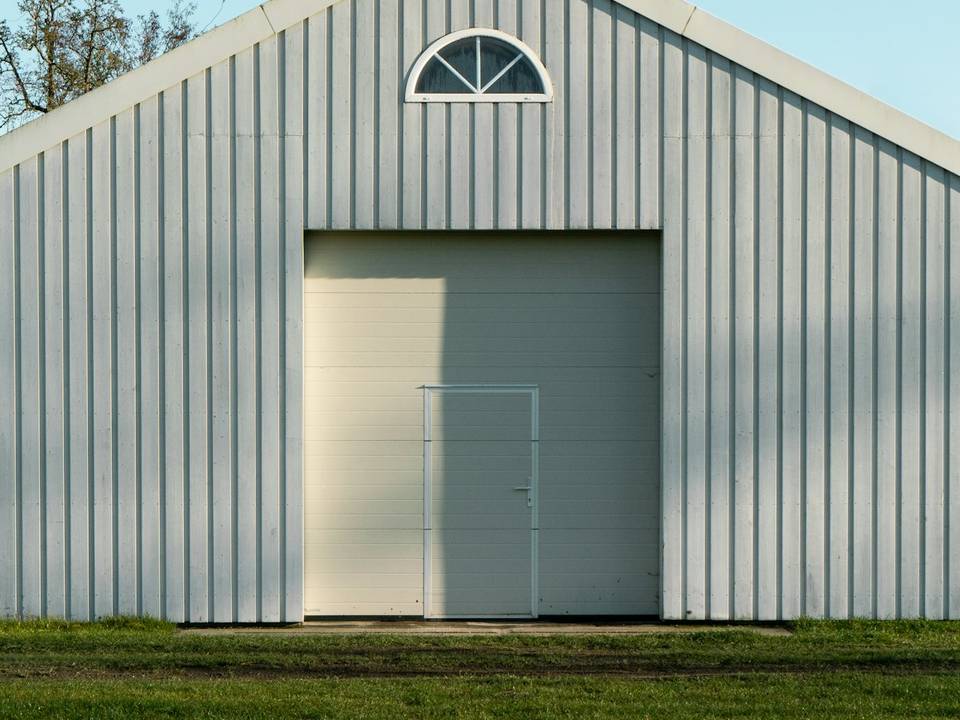
Drive out of Wichita Falls in any direction and you will see them: metal shops behind houses, equipment barns on ranches, steel buildings that serve as garages, workshops and small business spaces. They go up fast and hold up well against wind and hail. But an uninsulated steel building in North Texas is close to unusable for part of the year. It roasts in summer, turns frigid in winter, and can drip water from the ceiling when the weather swings.
This guide covers what goes wrong inside a bare metal building, which insulation options make sense, and how to choose based on how you actually use the space.
Why bare steel is so uncomfortable
Steel conducts heat very well. On a summer afternoon, sun on the roof panels heats them quickly, and that heat radiates straight down onto you and whatever you have stored inside. With the doors shut, a shop can get far hotter than the air outside.
In winter the process reverses. The thin metal skin offers almost no resistance, so any heat you add from a shop heater passes right back out. When a cold front blows through, the building cools down nearly as fast as the outdoor air.
The condensation problem
The issue that surprises most owners is moisture. When warm air inside the building touches cold steel, water condenses on the panels, just like a cold glass sweats on a warm day. Here it happens most often on cold nights and mornings, especially after a front drops the temperature quickly. The water then drips onto tools, vehicles, hay or equipment.
Over time, that dripping leads to rust on fasteners and panels, stains, and damage to whatever sits below. Good insulation keeps warm, moist air from reaching the cold metal, and that is often the main reason ranchers and shop owners call us.
Your insulation options
Closed cell spray foam
Closed cell spray foam is applied directly to the inside of the roof and wall panels. It bonds to the metal, adds solid insulating value, seals gaps at seams and fasteners, and keeps moist interior air off the steel. That combination makes it a strong choice for shops you heat or cool, and for buildings with a long condensation history. It also adds some rigidity to the panels.
Faced fiberglass blanket
Many steel buildings use rolls of fiberglass with a vapor retarder facing, installed between the panels and the framing. It is easiest to install during construction, before the panels go on. Adding it to an existing building is possible but more involved. The facing must be continuous and properly taped at the seams, or moist air will get behind it and condense anyway.
Radiant barrier
A radiant barrier reflects radiant heat from a hot roof. The U.S. Department of Energy notes that radiant barriers are more effective in hot climates than in cool climates. In an unconditioned barn or equipment shelter, a radiant barrier can take the edge off summer heat. On its own, it does little for winter warmth or condensation, so it is usually one piece of a plan rather than the whole plan.
For a deeper look at all three, see our metal building insulation service page.
Match the insulation to how you use the building
- Heated and cooled workshop or office: Treat it like a house. Closed cell spray foam on the roof and walls is usually the most effective option, because it insulates and air seals at once.
- Vehicle and equipment storage: Condensation control matters most here. Spray foam on the roof, or at least on the areas over your equipment, can stop the dripping.
- Hay barn or open equipment shelter: If the sides are open, full insulation may not pay off. A radiant barrier under the roof can make it more bearable in summer.
- New build: Faced blanket insulation installed during construction is the simplest route. Plan it with your builder before the panels go up.
Do not forget doors, vents and seams
Big roll up and sliding doors leak a lot of air, and North Texas wind pushes hard against them. Weatherstripping and sealing around door frames helps. Seams between panels and gaps at the base of the walls let in wind, dust and pests. If you heat or cool the building, think about ventilation as well, especially if you run gas heaters, fuel equipment or do welding inside.
Shops on ranch and rural properties
We work on metal buildings across Wichita County and nearby Clay and Archer counties, from shops behind homes in Burkburnett and Iowa Park to barns on acreage around Electra, Henrietta and Holliday, plus commercial and residential buildings in Wichita Falls. Rural jobs can involve longer drives and larger buildings, which is part of what shapes the price. Our insulation cost guide walks through those factors.
Key points
- Bare steel bakes in summer, chills fast in winter, and sweats when warm air meets cold metal.
- Closed cell spray foam insulates, seals and stops condensation in one step.
- Faced fiberglass blanket works best when installed during construction.
- A radiant barrier helps with summer heat but not condensation.
- Choose based on how you use the building and whether you heat or cool it.
Have a shop or barn that is too hot, too cold or dripping? Request a free estimate and we will look at the building, talk through how you use it and recommend the right insulation.