Spray foam insulation in Wichita Falls
Open and closed cell foam that insulates and seals out wind, dust and drafts, for attics, walls and metal buildings.
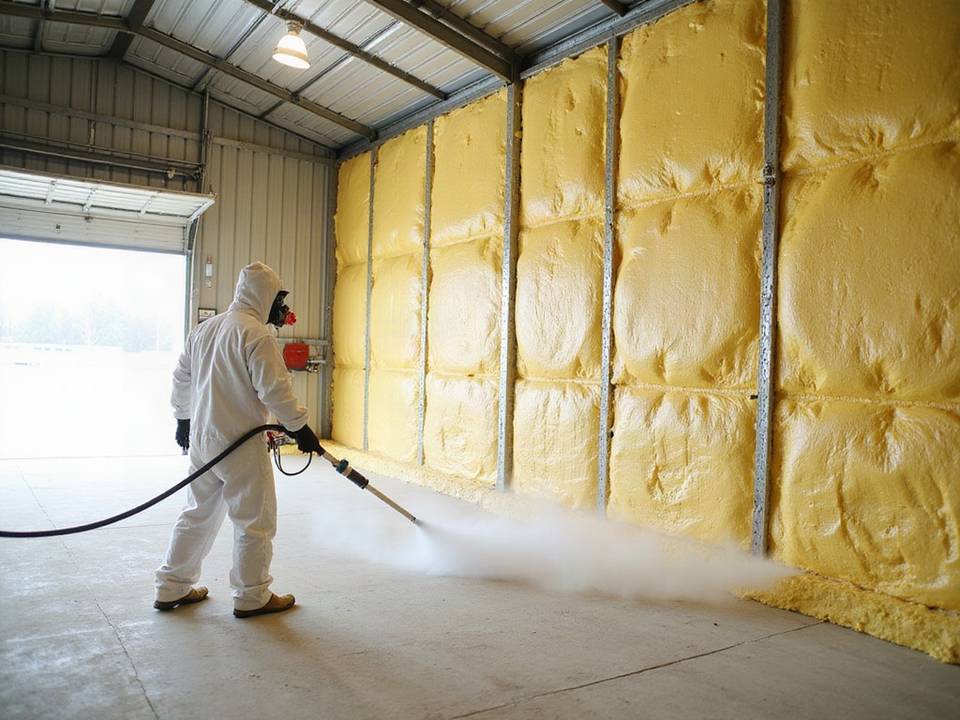
One layer that insulates and seals
Loose fill and batts slow heat, but air moves right through them. Spray foam goes on wet, expands into cracks and seams, and cures into a solid layer. It stops heat and stops air in the same pass, and it does not settle or shift over time.
That air seal earns its keep in Wichita Falls. Summer afternoons run well past 100 degrees, a winter front can drop the temperature fast, and the wind blows hard in every season. Wind pushes outside air through gaps around light fixtures, plumbing stacks and wall tops, carrying heat in summer, cold in winter and dust all year. Foam closes those paths while it insulates.
The job we do most is open cell foam under the roof deck. That brings the attic, the air handler and the ductwork inside the sealed shell of the house, so the ducts are not sitting in a scorching attic in July or a cold one in January. For metal shops and barns, closed cell foam is the better fit.
- Open cell foam for roof decks, walls and quieter rooms
- Closed cell foam for metal buildings, rim joists and tight spaces
- Air sealing at top plates, wire and pipe holes and attic hatches
- Protective coatings such as ignition barriers where code requires them
- Free inspection and a written price before we start
Open cell or closed cell?
Both are spray foam, but they are built for different spots. We pick based on where the foam goes and what that surface has to handle.
| Open cell | Closed cell | |
|---|---|---|
| Feel | Soft and spongy | Hard and rigid |
| Insulation per inch | About R-3.5 to R-3.8 | About R-6 to R-7 |
| Water vapor | Lets it pass | Slows it |
| Relative price | Lower | Higher |
| Best use | Attic roof decks, interior walls, sound control | Metal shops and barns, rim joists, thin cavities |
Wondering how one house can handle both extremes? Read our guide to insulation for hot summers and cold winters.
Jobs where spray foam is worth the price
Ductwork in the attic
A foamed roof deck keeps the ducts out of summer heat and winter cold, so less of what you pay for is lost on the way to the vents.
Drafty older homes
Older houses in Wichita Falls often leak at every seam. You feel it most on a windy day. Foam closes the gaps.
Dusty, windy sites
Homes on open land take the full force of the wind. A sealed shell keeps more of the dust outside.
Shops and barns
Closed cell foam cuts heat in metal buildings and keeps the roof from dripping on cold mornings.
When to skip it: if your ducts are sealed, your attic is in good shape and you just need more depth, blown in insulation goes further for the money. We will say so if that is your situation.
What happens on a spray foam job
Inspect
We look at the roof deck or building, wiring, ducts, vents and any old leak stains.
Written estimate
Foam type, thickness and each area covered, spelled out.
Protect the space
Floors, walls and stored items get covered. Vents are handled according to the design.
Spray and clean
Foam goes on to the listed depth, gets trimmed where needed, and we clean up.
What spray foam costs
Foam is sold by the board foot, which is one square foot at one inch thick. The total depends on the surface area, the thickness, open versus closed cell, and how easy the space is to work in. Low pitch attics and tall shop ceilings both add time.
You get a written price after a free inspection. Our page on what affects insulation cost shows what to compare between quotes.
Spray foam questions
Does spray foam help in winter too?
- Yes. It slows heat loss and blocks cold air from blowing in through gaps.
- Ducts inside a foamed attic also lose less heat on the way to your rooms.
Will my attic vents be closed off?
- With an unvented roof deck design, yes. The attic becomes part of the conditioned space.
- We walk you through the plan before work begins.
What if my roof gets replaced after a hail storm?
- Foam on the underside of the deck usually stays in place when shingles are replaced.
- If decking has to be replaced, the foam on those boards has to be redone. Ask your roofer before the work starts.
Will the house smell afterward?
- There is an odor while the foam goes on and cures.
- Stay out for the time the manufacturer lists, usually about a day.
How long does it take?
- Most attics take a day. Large homes and big metal buildings can take two.
Spray foam insulation near you
Get a free spray foam estimate
Prefer to talk? Call us and we will set up your free inspection.